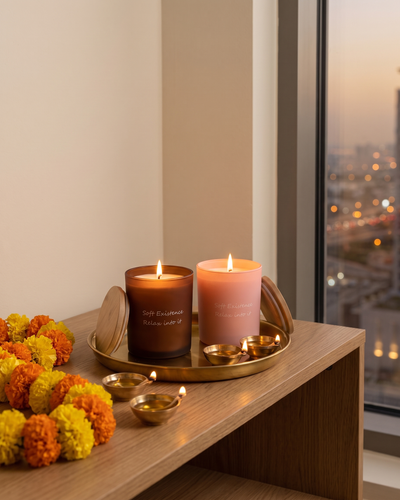

There is an hour, somewhere between the working day and the evening proper, when a room seems to hesitate. The daylight has thinned but not yet gone; the lamps feel premature. It is a threshold, and most of us pass through it without noticing, moving from one task to the next, letting the overhead light snap the moment flat. But it is precisely this hour that a candle was made for. Struck at dusk, a single flame does something no switch can manage. It does not illuminate the room so much as soften it.
The light of a candle is small, and that is the whole of its power. It draws the edges of a space inward, gathering the room around its warmth and letting the corners fall gently dark. We respond to this almost without thinking. The body reads the low, flickering light as an invitation to slow, to settle, to lower the voice. Long before electricity, this was simply what evening looked like. Something in us still recognises it, and is quieted by it.
The object before the flame
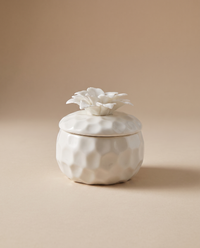
A candle, though, is not only its light. Before it is ever lit, it is a form, a considered object that holds its place in a room the way a small piece of art might. Our sculptural ceramic flower candles do exactly this, their hand-finished blooms catching the daylight long before dusk, while the softly frosted glass candles keep a quieter, more architectural presence on the shelf. This is the difference between a candle that decorates and one that belongs. The good ones earn their place twice, once as sculpture, once as flame.
Then there is scent, which arrives last and lingers longest. A considered fragrance does not announce itself. It moves through the room slowly, the way warmth does, until the air itself feels different. Whether it is the deep, nocturnal hush of black coffee, soft florals and vanilla, or the warmer lift of cinnamon and bergamot, a particular note becomes, over time, inseparable from the memory of certain evenings. Scent is the most patient of the senses. It waits to be noticed, and then it stays.
To light a candle at dusk is to mark the day as finished, to tell the room, and yourself, that the evening may now begin.
The ritual of the small flame
What a candle really offers is a ritual, and rituals are how we make ordinary time feel like ours. The strike of the match, the brief watching as the wick takes, the slow settling of the light, these are not efficient acts, and that is exactly their value. They ask you to pause. In a day organised almost entirely around getting things done, the candle is a small, deliberate argument for the opposite: for slowness, for atmosphere, for an evening that is allowed to begin gently.

So let the overhead light wait a little longer tonight. Find the threshold hour and meet it with a flame. Our design candles are made to be lived with in just this way, sculptural by day, quietly transforming by dusk, and unhurried in everything between.