
Bread is the one thing in the kitchen almost everyone stores wrongly, and the two most common methods - the fridge, and the bag it came in - are the two worst options available.
Understanding why comes down to knowing that bread has two separate enemies, and that most storage advice only defends against one of them.
Bread goes bad in two different ways
Staling is not bread drying out. It is a process called starch retrogradation: the starch molecules, which absorbed water and softened during baking, gradually recrystallise and push that water back out. The crumb turns firm and crumbly. This happens fastest at around 4C - which is precisely the temperature inside your fridge.
Mould is the other one, and it wants warmth and moisture. In a kitchen sitting at 24C with humid air, mould is the more urgent threat, which is why bread here often turns before it turns stale.
Every storage decision is a trade-off between these two. Anything airtight slows staling but traps the moisture mould needs. Anything breathable holds off mould but lets the crumb dry.
Why not the fridge
Refrigerating bread makes it go stale several times faster than leaving it on the counter. It genuinely is the worst thing you can do to a loaf.
It does delay mould, which is why the habit persists. But you trade a few extra days of visual freshness for bread that is dry and tight within twenty-four hours. If you will not finish it in time, freeze it rather than chill it.
Why not the plastic bag it came in
Plastic is completely non-breathable. It holds every bit of moisture the loaf gives off against the crust, which does keep the crumb soft - and softens the crust into something limp, then grows mould early.
For soft supermarket sandwich bread, plastic is roughly the right answer; that bread is formulated for it and has no crust worth protecting. For anything with a real crust - sourdough, a bakery loaf, khubz - plastic ruins the best part within hours.
What actually works
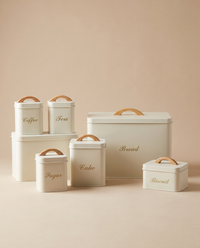
A bread bin. This is the compromise the whole category exists to solve. A bin holds humidity high enough to slow staling, but vents just enough that the air does not saturate and turn mouldy. That is why a proper bread bin has a small gap or vent and is not simply a sealed box - a fully airtight container would be a mould incubator.
Keep it somewhere cool. A bin sitting beside the oven or in afternoon sun is working against itself.
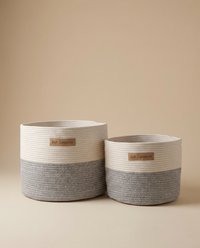
A linen or cotton bag. Breathable, keeps the crust crisp, lets the crumb dry a little faster. Good for a loaf you will finish in two days.
Cut side down on a board. For a crusty loaf being eaten within a day, this is genuinely fine. The cut face seals against the board and the crust protects the rest.
The freezer, for anything longer. Slice the loaf first, freeze in a bag, and take out what you need. Frozen bread toasts from frozen without thawing and loses almost nothing. This is the only method that truly stops both staling and mould, and it is badly underused.
How long you actually get
- Crusty bakery loaf, bread bin: 2-3 days at best.
- Soft sandwich loaf, its own bag: 5-7 days.
- Anything, refrigerated: stale within a day, mould delayed a few.
- Anything, frozen and sliced: around 3 months.
In a warm, humid kitchen, take a day off each of the counter figures. Bread in the Gulf simply has a shorter life than the same loaf in a temperate climate, and no container changes that.
How to stop bread going mouldy
Mould arrives as airborne spores, and they land on the loaf long before you see anything. Three things help.
Keep the bin clean and dry. Crumbs at the bottom hold moisture and seed the next loaf. Empty and wipe it weekly, and dry it properly before the next loaf goes in - this is the step everyone skips and it matters more than the container itself.
Never store bread warm. A loaf put away before it has fully cooled releases steam into the bin and condenses. Cool it completely on a rack first.
Do not mix loaves. One loaf beginning to turn will pass it to a fresh one sharing the same air.
And if you find mould, throw the whole loaf. Cutting the visible spot away does not work - the network runs invisibly through soft bread well beyond what you can see.
Reviving a loaf that has gone hard
Staling is partly reversible, which is the useful thing almost nobody knows. Heat pushes the recrystallised starch back into its soft state.
Run the crust briefly under a tap, shake off the excess, and put the loaf in a 180C oven for eight to ten minutes. It comes out close to fresh. It will stale again faster afterwards, so do this just before eating rather than in advance.
The short version
- Never the fridge. It is the fastest way to stale bread.
- A vented bread bin, somewhere cool, for two to three days.
- Slice and freeze anything you will not finish.
- Cool bread fully before storing, and keep the bin clean and dry.
- Refresh a hard loaf with water and eight minutes of heat.
Our storage sets pair a vented bread bin with sealed canisters for exactly this reason - bread and dry goods want opposite conditions. More on the dry-goods half in How to Store Flour, Rice and Sugar, and the sets themselves are in kitchen storage.